



Realize your dream of home ownership
Buying a home in Quebec is much more than a simple real estate transaction. It’s a life project, a major investment and, for many, the fulfillment of a long-held dream.
This guide is intended for both first-time and experienced buyers looking to purchase a home in Quebec in 2026.
In 2026, the Quebec market presents particular challenges. APCIQ forecasts project a provincial median price of CAD 520,200 for single-family homes, up 6% on 2025. Condos average CAD 408,000. The market remains favorable to sellers in several sectors.
Why follow a structured process? Because the Quebec system has its own rules. From the OACIQ form to the mandatory involvement of a notary, and including programs such as RAP and CELIAPP, every step counts.
This guide takes you through the 10 essential steps and 10 expert tips for successfully buying a home in Quebec.
Ready to get started? Get quotes from qualified brokers with the Clic Agents form and compare offers from OACIQ-certified professionals.
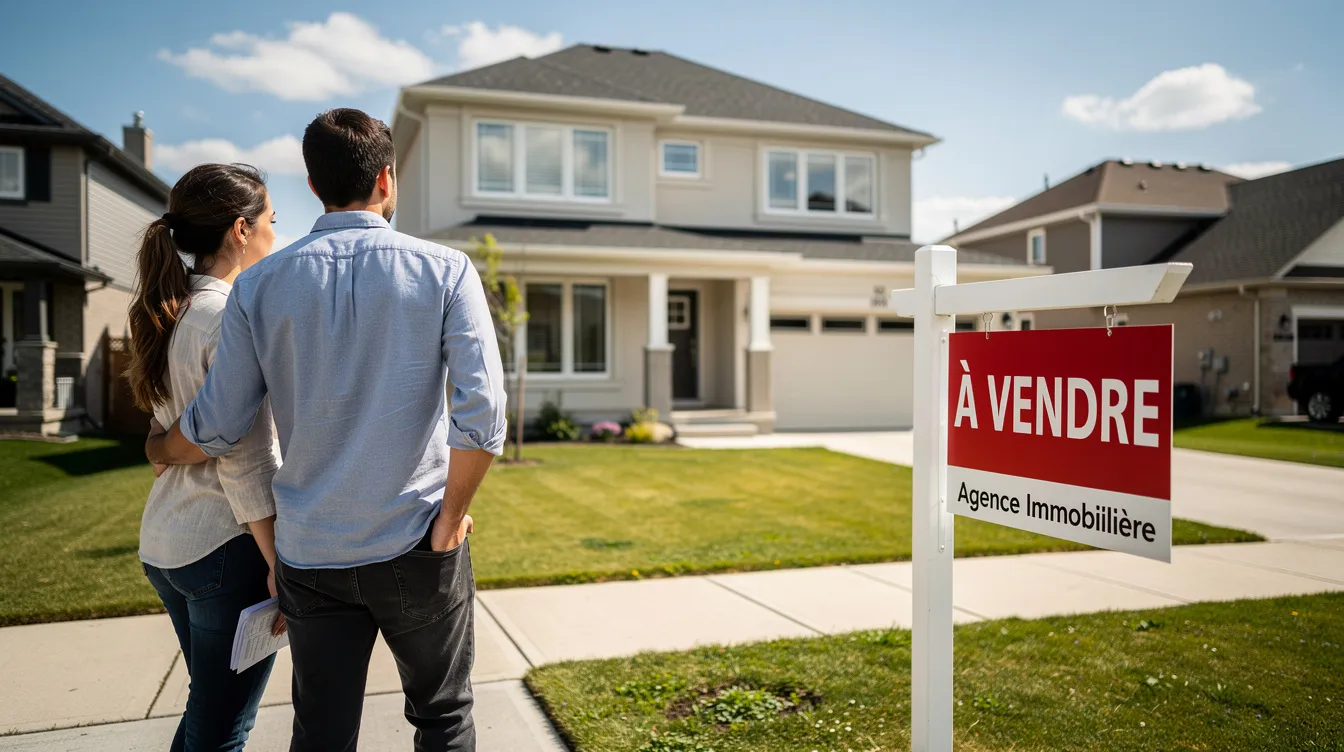
10 essential steps to buying your home in Quebec
These steps follow the Quebec system governed by the OACIQ and are aligned with the standards of the Autorité des marchés financiers. Each step is crucial to the success of your purchase and to avoiding common pitfalls.
Step 1: Assess your financial situation and determine your budget
Before you visit any property, you need to know your real borrowing capacity.
Quebec follows the federal mortgage stress test. In 2026, banks generally maintain a debt-to-income ratio ceiling of 35%, including insurance. The Gross Debt Service (GDS) ratio is capped at 39% of gross income for housing-related costs. The Total Debt Service (TDS) ratio reaches 44% including other debts.
Practical calculation: A buyer with a household income of CAD 80,000 can generally afford a home worth around CAD 450,000 with a 5% rate and a 20% down payment.
Don’t forget the additional costs specific to Quebec:
- Welcome tax (transfer duties): 0.5% to 3% depending on amount
- Notary fees
- Pre-purchase inspection
- Tax adjustments
Step 2: Save for your downpayment
The downpayment represents your personal contribution to the purchase. In Canada, the minimum downpayment for a CMHC-insured mortgage is 5% of the purchase price, while for a conventional mortgage it is 20%.
Minimum structure :
| Purchase price | Minimum downpayment |
|---|---|
| Less than $500,000 | 5 % |
| 500,000 to $1 million | 5% on the first $500,000 + 10% on the remainder |
| Over $1 million | 20% (non-insurable mortgage) |
The ideal down payment is 20% to avoid loan insurance. In 2026, a 10-20% down payment is strongly recommended to obtain the best mortgage rates.
Tools available in Quebec :
The Home Buyers’ Plan (HBP) allows you to withdraw up to $35,000 tax-free from your RRSP to buy your first home, and this limit will be increased to $60,000 as of April 16, 2024.
The CELIAPP offers tax-deductible annual contributions of CAD 8,000, with government bonuses of up to CAD 500 per year for incomes under CAD 51,000.
A Tax-Free Savings Account (TFSA) allows you to save or invest money tax-free, and can be used to save for the purchase of a home.
Case study : A young Montreal couple saved CAD 60,000 in 3 years via the CELIAPP/RAP combo, enabling a 10% down payment on a CAD 385,000 condo.
Step 3: Check and improve your credit file
Your credit rating has a direct impact on your access to financing and your loan conditions.
Get your free report from Equifax Canada (equifax.ca) and TransUnion Canada (transunion.ca). The average score in Quebec is 680 according to Borrowell 2025 data.
A good credit rating, generally considered to be 670 or higher, tells lenders that the risk of non-repayment is low, which increases the chances of obtaining a mortgage. Lenders check borrowers’ credit ratings to assess their ability to repay a mortgage, which can influence the amount of the loan granted and the interest rate.
Good to know: 30% of reports contain inaccuracies. Correct any errors before applying for a loan.
A high credit score can also provide access to more favorable lending conditions, such as lower interest rates, which can reduce the total cost of borrowing. A score below 680 can add 1 to 2% to the interest rate, representing up to CAD 50,000 in additional interest over the life of a CAD 400,000 mortgage.
Step 4: Obtain a mortgage pre-authorization
Pre-authorization is your passport to serious visits.
A mortgage pre-approval allows you to determine your borrowing capacity and estimate the amount of your payments, while guaranteeing an interest rate for a period of 60 to 130 days.
Documents required:
- T4 and pay stubs (2 years)
- Notice of assessment
- Proof of assets
- Bank statements
Approval times vary from 3 to 10 days, depending on the institution. To get pre-approved for a mortgage, you’ll need to gather documents proving your income and downpayment, which will enable the lender to determine your borrowing capacity.
Mortgage pre-approval is a sign of confidence for sellers, as it demonstrates the buyer’s credibility, especially in the case of multiple offers on a property.
Types of mortgages available :
There are several types of mortgage, including open, closed, transferable and prepayment mortgages. An open mortgage allows the loan to be repaid at any time without penalty, while a closed mortgage imposes restrictions on prepayment.
Mortgage interest rates can be fixed, variable, hybrid or combined, and are generally based on the key interest rate. In 2026, variable rates range from 4.85% to 5.25%, while 5-year fixed rates are between 5.25% and 5.75%.
Step 5: Choose your real estate broker
Choosing a qualified broker can make all the difference to your buying experience.
Choose only a broker who is a member of the OACIQ (verifiable on oaciq.com). There are over 25,000 licensed brokers in Québec. Real estate brokers are obliged to represent their clients in their best interests, and are governed by the Real Estate Brokerage Act, offering significant protection to buyers.
Using a real estate broker to buy a property is beneficial, as they have a vast network of experts and can provide sound advice based on the real estate market.
Questions to ask :
- How many transactions do you carry out per year (aim for 20+)?
- What’s your expertise in this area?
- How does your remuneration work?
A good real estate broker knows the local market better than anyone, and sets realistic expectations of what’s on offer in the buyer’s price range. Studies show that transactions with OACIQ brokers exceed FSBO sales by 7% in price.
Need a broker you can trust? Fill in the Clic Agents form to receive quotes from several qualified brokers and compare their services.

Step 6: Define your criteria and start searching
Before buying a home, it’s essential to establish your needs and preferences, such as property type, neighborhood and desired amenities.
Distinguish between your needs and your desires:
| Needs (essential) | Desires (desirable) |
|---|---|
| 3 bedrooms | Swimming pool |
| Garage | Water view |
| Close to work | Landscaped garden |
| Office space | Finished basement |
Once you’ve determined your budget, it’s important to start actively searching for properties, using online tools and visiting homes.
Search tools :
- Centris.ca (over 4 million ads)
- Realtor.ca
- Municipal websites
Prix 2026 in Montreal :
- Ville-Marie: $625,000 and over
- Plateau Mont-Royal: $750,000 and over
- Hochelaga: average $475,000
- Condominiums: $385,000 median
Step 7: Visit properties and analyze the market
The visit is your moment of truth. Be prepared with a checklist.
Points to consider :
- Age of roof (asphalt: 20-30 years service life)
- Foundation condition (cracks?)
- Electrical and plumbing systems
- Signs of water infiltration
Important questions :
- Have there been floods in the past?
- What work has been carried out and with what permits?
- Why do you sell?
Assess the neighborhood at different times. Take walks on weekdays and weekends to observe the traffic, noise and atmosphere. Statistics show that 70% of buyers visit more than 10 properties before finding the right one.

Step 8: Make a strategic purchase offer
When you find a house you like, you need to make an offer to purchase, which is a formal proposal to the seller, including the price and conditions of sale.
In Quebec, use OACIQ Form 101 (promise to purchase). This standardized document protects both parties.
Conditions precedent to be included :
- Financing (usually 10 days)
- Pre-purchase inspection (7 days)
- Sale of your current property (if applicable)
Compromises of sale often contain suspensive clauses, allowing cancellation at no cost if a loan is refused.
After signing the compromis de vente, there is a 10-calendar-day cooling-off period during which the buyer can change his or her mind without reason or penalty.
Trading strategies in 2026 :
In a seller’s market, offers are often 2-5% above asking price. Negotiate inclusions (appliances, fixtures) and possession date to get a better overall deal.
Step 9: Have the property inspected
A pre-purchase inspection is recommended to assess the condition of the property prior to purchase, helping to detect potential problems and avoid costly surprises.
Choose an inspector who is a member of the AIBQ (Association des inspecteurs en bâtiment du Québec). Quebec has more than 1,200 certified inspectors.
In addition to the downpayment, buyers must anticipate an inspection fee of between $750 and $850 for a single-family home.
The inspection report covers :
- Structure and foundations
- Electricity (in accordance with the Québec Electrical Code)
- Plumbing and heating
- Roofing and insulation
- Over 1,000 inspection points
Following discovery, you can negotiate a price reduction of 5-10% for major defects such as a roof requiring $10,000 in repairs.
Step 10: Finalize the purchase at the notary’s office
The final signature at the notary’s office transfers ownership, at which point the balance is paid and the keys handed over.
About 3 months elapse between the compromise and the final deed, to allow the notary to check urban planning and the right of pre-emption. In Quebec, it generally takes 30 to 90 days after acceptance of the offer.
Expenditure :
Notary fees for the purchase of a house generally vary between $1,000 and $1,500. Notary fees vary from 7% to 8% of the price for an old property, and from 2% to 3% for a new one.
Closing costs are generally 2% to 3% of the purchase price, including notary, inspection and other related fees. Closing costs for home purchases can range from 1.5% to 4% of the purchase price.
The meeting at the notary’s office lasts 30 to 60 minutes. The deed of sale authenticates the transfer of title. You pay the transfer tax and receive the keys to your new home.

10 expert tips for buying property in Quebec
Once you’ve accepted your offer to purchase, you’ll need to obtain a mortgage, which involves gathering documents and signing a contract with your lender. Here’s our advice on how to avoid costly mistakes.
Looking for expert help? Submit your request via Clic Agents and receive personalized proposals from certified brokers.
Tip 1: Don’t rely solely on love at first sight
The desire to buy is not enough. Data shows that 25% of emotional purchases result in resale losses. Balance emotions and logic by calculating potential ROI and analyzing practicalities.
Tip 2: Negotiate beyond the purchase price
Price is just one element. Negotiate inclusions (refrigerator worth $2,000), flexibility on possession date (save $1,000 in storage fees) and minor repairs.
Tip 3: Budget for the unexpected
Keep 5% of the purchase price in reserve. This covers surprises like a furnace that needs replacing ($5,000) or urgent repairs. Hidden costs are common in Quebec, especially with older properties.
Tip 4: Check municipal and school taxes
The impact on your monthly budget is significant. In Montreal, municipal taxes represent an average of 0.8% of value (CAD 3,200/year on $400,000). There are variations of up to 20% between municipalities. Add school taxes ranging from $500 to $1,000 per year.
Tip 5: Analyze resale potential
Study the neighborhood’s evolution and future projects. The REM, for example, has boosted values by 10% in some areas. Sources of information include municipal urban plans and city announcements.
Tip 6: Understand condominium fees
For a condo, the average annual fee is CAD 4,500. Check that the contingency fund represents at least 10% of annual fees. Ask for meeting minutes to identify any upcoming disputes or major work.
Tip 7: Evaluate energy costs
Ask for Hydro-Québec bills for the past 12 months (average 2,500 CAD/year). Energuide ratings can reveal potential savings of 20%.
The Diagnostic de Performance Énergétique (DPE) is a document that evaluates a property’s energy consumption and its impact in terms of greenhouse gas emissions. In 2026, it’s important to pay particular attention to the DPE, as a poor rating can limit rental options and require costly maintenance work.
Tip 8: Test your commute to work
Montreal commutes take an average of 45 minutes during rush hour. Simulate your daily commute at different times. Consider public transit options and reliability in your target neighborhood.
Tip 9: Check Internet and cell phone quality
Coverage varies considerably. Around 20% of rural areas have gaps in coverage. Test the connection on site with your provider. Check the availability of Québecor, Bell and other services in your area.
Tip 10: Plan your move in advance
July 1 in Quebec means moving for everyone. Reserve 6 months in advance for this period. Arrange official changes of address with the SAAQ (free), Revenu Québec and other organizations by e-mail or online.
Summary of key steps to a successful purchase
Buying a home in Quebec follows three main phases:
Phase 1: Preparation (1-3 months)
- Financial evaluation and budget
- Savings and downpayments
- Credit check
- Mortgage pre-approval
Phase 2: Research (2-4 months)
- Broker selection
- Criteria definition
- Property tours
Phase 3: Purchase (1-2 months)
- Offer and negotiation
- Inspection
- Closing at the notary’s office
Typical total lead time: 6 to 12 months from start of process to handover of keys.
Buying a home in France is a structured process that generally takes three months from initial agreement to handover of the keys. In Quebec, with the notarial system and inspection delays, expect a similar timetable for the final phase.
Surround yourself with qualified professionals: OACIQ brokers, AIBQ inspectors and experienced notaries. This careful planning makes the difference between a successful transaction and costly regrets.

Frequently asked questions about buying a home in Quebec
What is the minimum down payment in Quebec?
The minimum is 5% of the purchase price for properties under $500,000. Between $500,000 and $1 million, it’s 5% on the first $500,000 plus 10% on the excess. Above $1 million, minimum 20%.
The difference between insured and conventional loans: an insured loan (down payment of less than 20%) requires CMHC insurance, adding approximately 2.8% to 4% to the amount borrowed. A conventional loan (20% or more) avoids this premium.
How long does the entire purchasing process take?
Allow 6 to 12 months in total. Financial preparation takes 1 to 3 months. Active search, 2 to 4 months. End of process (offer to closing), 1 to 2 months.
Accelerating factors: pre-approval in hand, impeccable credit record, quick decisions. Delaying factors: financing problems (10% of cases), inspection findings, competitive market with multiple offers.
When should I use a real estate broker?
As soon as you’ve set your budget and are ready to start looking in earnest. The buyer broker’s services are free for you – they are paid for by the seller via the total commission of 5-6%.
Advantages: privileged access to new listings, expert negotiation, legal protection under the Real Estate Brokerage Act, support right up to handover of keys.
What if my offer to purchase is rejected?
Analyze the reasons: price too low? Conditions too strict? Financing not confirmed? In the 2026 market, a 3% price increase may be enough to get an offer accepted.
Strategies for the next offer: get a solid pre-approval, reduce suspensive conditions if possible, be flexible on the possession date. Consider waiving the inspection condition (with caution and pre-inspection).
Is inspection mandatory?
No, an inspection is not a legal obligation. However, it is a standard suspensive condition recommended by the OACIQ and all professionals.
The cost of $750 to $850 can save you $20,000 or more by avoiding a property with hidden structural problems. Things revealed by a qualified inspector include potential hidden defects, the actual condition of the roof, electrical or plumbing problems not visible to the naked eye.
Buying a home in Quebec in 2026 requires preparation, patience and professional guidance. With this guide, you’ll have all the keys you need to navigate the process with confidence.
Ready to take action? Get your free quotes through Clic Agents and connect with qualified OACIQ brokers in your area. Your dream of home ownership starts today.

